Public Talks and Professional Workshops
Overview
I deliver public lectures and evidence-based workshops designed to support the academic community. My sessions cover essential professional skills like public speaking, alongside critical discussions on mental well-being and navigating impostor syndrome. I have public lectures on astrobiology, exoplanets, and the highlights of the James Webb Space Telescope. I've recently developed a session on critical thinking in the age of AI.
Please contact me for availability
for public talks or if interested in a workshop:
s.rugheimer (at) ed.ac.uk
Public Lectures & Media
I am an active speaker on astrobiology and the search for life, appearing at prestigious venues including the Radcliffe Institute for Advanced Study, the Royal Astronomical Society, and the Royal Geological Society. My lectures focus on the intersection of planetary science, atmospheric biosignatures, and the future of exoplanet characterization.
My work is frequently featured in international media with over 120 radio and TV appearances. I have been a guest on Global News, CTV, Newstalk 1010, BBC Radio 4 (Inside Science and The Curious Case of Rutherford & Fry) and NPR (Radio Open Source), discussing the prospects of finding a second Earth and the scientific milestones of the James Webb Space Telescope.
Outreach Portfolio
View a full list of past public talks, radio interviews, and media appearances.
Cosmos as Canvas

Have you ever marvelled at a picture of the galaxy and wondered what its colors and features really mean? In this hands-on workshop for the public we will decode the stunning images of the James Webb Telescope, before making your own digital astronomy art. You’ll process publicly available NASA data using laptops and free software to create breathtaking visuals of the universe and join the ranks of citizen astronomers everywhere. Given as a TED discovery session in 2025 and at York University and University of Edinburgh. Here is a link to the written tutorial instructions.
A sample of Public Talks offered
James Webb: Unveiling the Hidden Cosmos
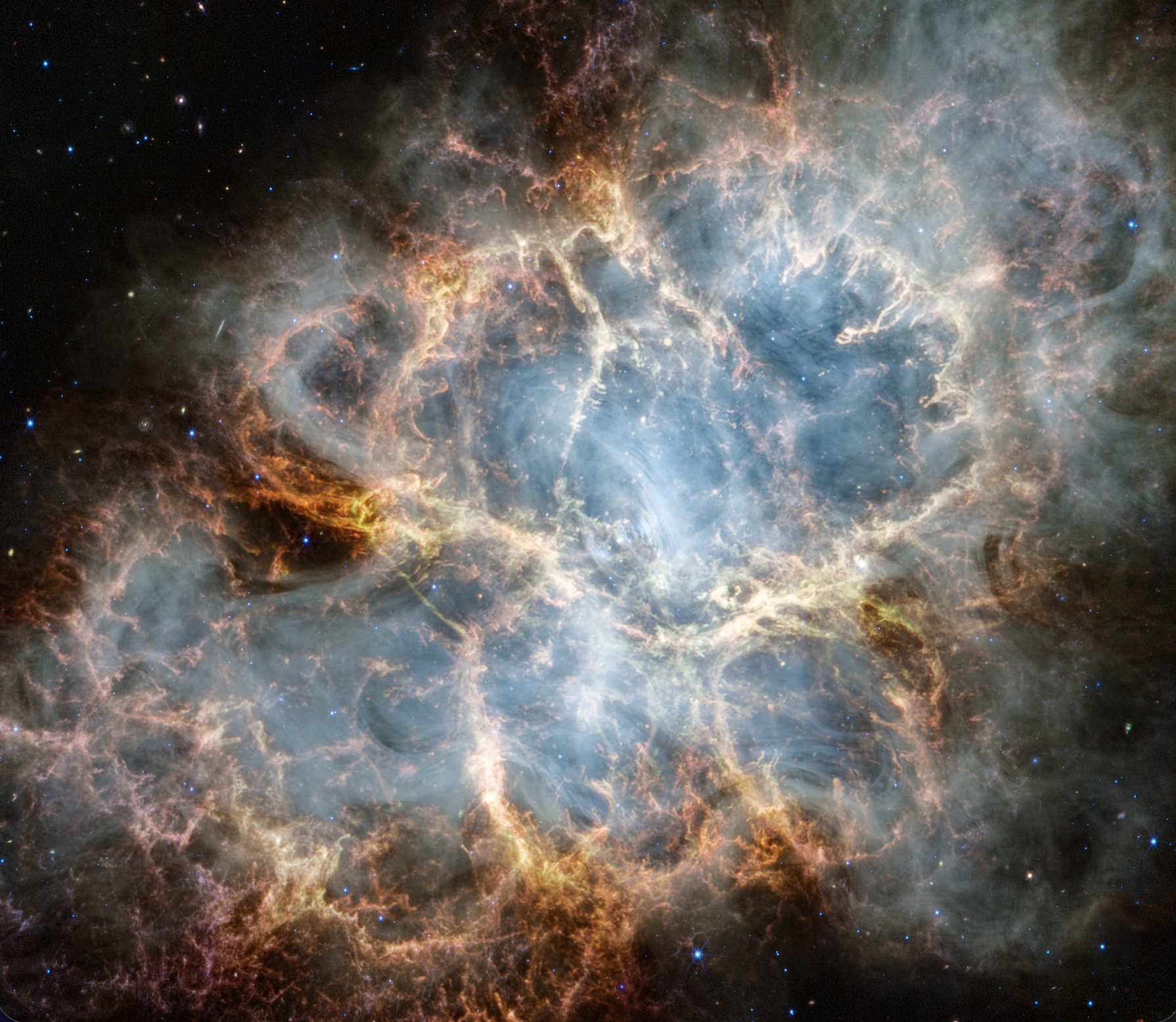
The James Webb Space Telescope (JWST) is transforming our understanding of the universe through its ability to observe the cosmos in infrared light, allowing us to see farther back in time than ever before. Its discoveries include distant galaxies formed just a few hundred million years after the Big Bang, as well as new insights into star formation, planetary atmospheres, and the chemistry of exoplanets. This lecture will explore images taken by JWST, the technology behind the telescope, and some of the key science contained in the images that have featured widely in the news.
Earth 2.0 - Detecting a Second Origin of Life in our Universe

This planet we call home is teeming with life from the very depths of the ocean where no light penetrates, to small brine layers between ice crystals and near-boiling iridescent waters of Yellowstone. As we discover the vast diversity of extremophile life on Earth, our minds can only begin to imagine the possibilities for life to exist on other planets in the Universe. In this talk I present how we are going to characterize terrestrial planet atmospheres orbiting other stars with future missions, hopefully finding evidence of life in the Universe and answering the age-old question of "Are we alone?"
Story of Life on Earth
There is only one known planet with life, Earth. In this talk I cover the highlights of the history of life on our planet. We will first venture back to the earliest days of our Solar System with the formation of our planet and then the massive impact collision that formed the Moon. The Hadean era was characterized by the first basalt crust as Earth cooled and then the formation of the oceans and granite setting the stage for the origin of life. There is more we don’t know than we do know about life's origins; one of my favorite quotes is by George Whitesides: “It’s a long way from slime to Mozart" and Steve Benner's follow-up: "And it’s a long way from HCN to slime.” Through looking first at the Stanley Miller experiment and the emergence of biomolecules, I will show how this foundation is thought to have contributed to the origin of self-replicating systems and competition. This early life was anaerobic, living the Archean era. I then discuss how oxygenic photosynthesis evolved and why O2 may evolve on other planets where water and CO2 are present, and thus why it is a key biosignature for exoplanet characterization missions.
Professional Development Workshops
Public Speaking Workshop

Public Speaking did not come easy to me. I used to turn bright red, visibly shake and my voice would quiver. Over the past 10 years I've taken many courses on public speaking, participated in professional development series, and have practiced. I now offer a three hour workshop covering the basics of public speaking based on what I've learned in that time. The old addage: "It's not what you say, it's how you say it" is true and often ignored in traditional University public speaking courses. Van Edwards at Science of People had people watch TED talks and rate them on charisma, credibility, and intelligence. The twist is that half watched the TED talk on mute. The ratings were the same. I've developed Finding Connection, an interactive three-hour workshop on the voice and body performance aspects of public speaking. A primary focus of the workshop is finding connection with your audience and stage presence. We will techniques to combat stage fright, how to physically warm up your voice and body before a talk, and how to find connection with your audience. Other topics will include vocal resonance, posture, vocal intonation, and handling questions. It requires no advance preparation but will require audience participation! Please email me if interested in running this workshop at your institution.
Impostor Workshop

 "Impostor syndrome" often hits students in grad school and academics in general, and can be incredibly isolating. Have you ever secretly worried that others will find out that you're not as smart as they think you are? That if they only knew the thoughts in your brain they would see that you are just barely keeping up? When you do succeed, do you think, "Phew, I fooled 'em this time but I may not be so lucky next time?" Or do you think that "If I can do it, it must not be that hard. Anyone could!" If so, you are not alone. Despite evidence of their abilities, many successful, intelligent people feel like they are an "impostor" and their successes are due to external factors or luck. This hour and a half workshop is perfect for a lunch time gathering where we will discuss the impostor syndrome and identify steps to overcome impostor thoughts.
Mental Health Workshop

